Mobile App Development Platforms in 2026: A Complete Guide to Choosing the Right Technology
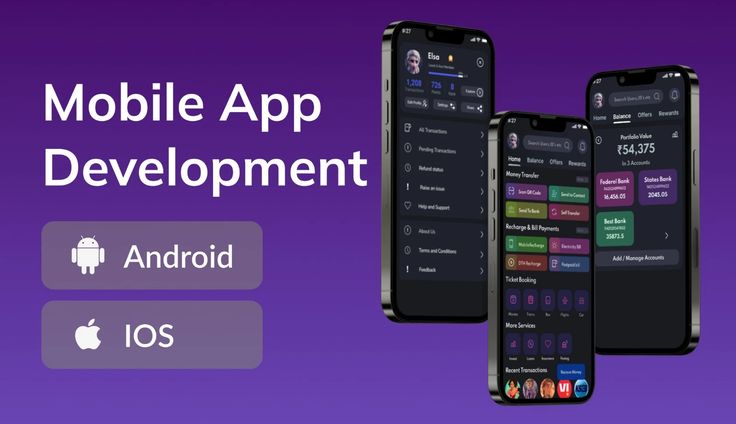
Mobile applications have transformed the way businesses communicate with customers, deliver services, sell products, and manage internal operations. From banking and healthcare to e-commerce, education, travel, entertainment, and social networking, mobile apps are now an important part of the digital economy.
However, building a successful mobile application is about much more than creating an attractive interface. Businesses need to make important decisions about programming languages, development frameworks, backend infrastructure, security, scalability, testing, maintenance, and deployment.
One of the most important decisions is choosing the right mobile app development platform.
The platform you select can affect development speed, application performance, development costs, access to device features, future scalability, and the overall user experience.
In 2026, businesses have more choices than ever. Developers can build applications specifically for iOS or Android, create a single codebase for multiple platforms, use low-code development environments, or take advantage of AI-assisted development tools.
So, which mobile app development platform is best in 2026?
The answer depends on your project.
There is no single platform that is perfect for every business or application. The best choice depends on your target audience, technical requirements, budget, development team, expected performance, and long-term business goals.
This guide explains the major mobile app development approaches and helps you understand which option may be the right fit for your next project.
What Is a Mobile App Development Platform?
A mobile app development platform is a collection of technologies, frameworks, programming tools, software development kits, testing environments, and supporting services used to create and manage mobile applications.
Depending on the platform, developers may use it to:
- Design mobile application interfaces
- Write and manage application code
- Connect apps to databases and APIs
- Access smartphone hardware
- Test applications on different devices
- Debug performance issues
- Manage authentication and security
- Build application releases
- Publish apps to app stores
- Maintain and update applications
Modern mobile development platforms are designed to simplify the entire development lifecycle.
Instead of building every component from scratch, developers can use established frameworks, libraries, plugins, APIs, and development tools to accelerate the process.
For businesses, this can mean faster development, easier maintenance, and a more predictable development process.
Why Choosing the Right App Development Platform Matters
Selecting a technology platform is one of the earliest and most important decisions in an app development project.
A poor technology choice can create problems later.
For example, a platform may help you launch an app quickly but become difficult to scale when thousands or millions of users start using it. Another platform may provide excellent performance but require a larger development team and a higher budget.
The right platform should support both your current requirements and future plans.
Here are some of the most important factors affected by your platform choice.
Development Speed
Some frameworks allow developers to build applications for multiple operating systems using a shared codebase. This can reduce development time and simplify project management.
Application Performance
Performance is critical for applications that process real-time data, video, maps, animations, or complex interactions.
Development Cost
Using a cross-platform framework can sometimes reduce the cost of maintaining separate iOS and Android development teams.
Scalability
A successful app may grow from a few hundred users to millions. Your technology stack should be capable of supporting future growth.
Security
Applications that handle payments, personal information, or sensitive business data require strong security practices and reliable platform support.
Maintenance
A platform should make it practical to fix bugs, release updates, and support new operating system versions over time.
The Main Types of Mobile App Development
There are several approaches to mobile application development. Each has advantages and limitations.
The four most common categories are:
- Native app development
- Cross-platform app development
- Hybrid app development
- Low-code and no-code development
1. Native Mobile App Development
Native development means building an application specifically for a particular operating system.
For example, developers typically use Swift and Apple's development tools for iOS applications and Kotlin with Android's development environment for Android applications.
Because native applications are designed specifically for their target operating systems, developers can take advantage of platform-specific features and APIs.
Advantages of Native Development
Native development provides excellent performance and responsiveness.
It is particularly suitable for applications that require:
- Advanced camera functionality
- Bluetooth and connected devices
- Augmented reality
- High-performance graphics
- Complex animations
- Background processing
- Advanced operating system integration
Native apps can also provide a highly polished experience because the application is designed specifically for the platform on which it runs.
Disadvantages of Native Development
The main challenge is that businesses targeting both iOS and Android may need separate development teams or separate codebases.
This can increase:
- Development time
- Development costs
- Testing requirements
- Long-term maintenance effort
Best For
Native development is ideal for businesses that need maximum performance, deep hardware integration, or highly platform-specific functionality.
2. Cross-Platform App Development
Cross-platform development has become one of the most popular approaches for modern mobile applications.
The concept is simple: developers create a shared codebase that can be used to build applications for multiple platforms.
Popular technologies include:
- Flutter
- React Native
- .NET MAUI
Instead of maintaining completely separate applications for iOS and Android, development teams can share a significant portion of their code.
This can make cross-platform development attractive to startups, small businesses, and companies that want to launch on multiple platforms efficiently.
Benefits of Cross-Platform Development
The biggest advantage is code sharing.
A business can potentially:
- Reduce duplicated development work
- Launch on multiple platforms faster
- Simplify maintenance
- Share business logic
- Maintain consistent branding
- Reduce development costs
However, cross-platform development does not mean that every project will require exactly the same amount of work across platforms. Developers may still need platform-specific code for certain hardware features or operating system behaviours.
Best For
Cross-platform development is a strong choice for:
- Startups
- E-commerce businesses
- Travel applications
- Social platforms
- Service marketplaces
- Education apps
- Business applications
- On-demand services
3. Hybrid App Development
Hybrid applications combine web technologies with native mobile capabilities.
In many hybrid approaches, a web application is packaged inside a native application container. Developers can use technologies familiar to web developers while still distributing the result through mobile app stores.
Hybrid development can be useful for simpler applications and businesses that already have strong web development capabilities.
However, for demanding applications, teams often prefer modern cross-platform frameworks because they can provide a more native-like experience and stronger performance.
Best For
Hybrid approaches may be suitable for:
- Content-based applications
- Internal business tools
- Simple service applications
- Existing web applications that need a mobile presence
The right choice depends heavily on the application's performance requirements and expected user experience.
4. Low-Code and No-Code App Development
Low-code and no-code platforms allow users to create applications with significantly less traditional programming.
These platforms often provide:
- Visual interface builders
- Drag-and-drop components
- Pre-built workflows
- Database integrations
- Authentication systems
- Automation tools
No-code platforms are particularly useful for entrepreneurs, small businesses, and teams that want to validate an idea quickly.
They can also be useful for building internal business tools without creating a large software engineering project.
However, these platforms can have limitations related to:
- Custom functionality
- Performance
- Scalability
- Data portability
- Platform dependency
For a small internal application, these limitations may not matter. For a large consumer-facing application, they should be evaluated carefully.
Best Mobile App Development Platforms in 2026
The best platform depends on the type of application you want to build.
Below are some of the major technologies and approaches businesses and developers should consider in 2026.
Flutter
Flutter is Google's open-source UI toolkit for building applications from a shared codebase.
It is widely recognised for its ability to create visually consistent interfaces across platforms.
Flutter uses the Dart programming language and provides a rich collection of UI components.
Why Choose Flutter?
Flutter can be a strong choice when a business wants:
- A highly customised user interface
- Shared development across platforms
- Fast development cycles
- Consistent visual design
- Strong support for animations
It is particularly popular among startups and development agencies that want to build applications for multiple platforms without maintaining completely separate codebases.
React Native
React Native is a popular framework for building mobile applications using JavaScript and React.
It is especially attractive to teams that already have experience with React and modern web development.
One of its major advantages is the large ecosystem surrounding JavaScript and React.
Why Choose React Native?
React Native can be a good option when:
- Your team already uses React
- You want to share development knowledge between web and mobile projects
- You need access to a large developer ecosystem
- You want to build applications for iOS and Android
For companies with existing React developers, the learning curve can be easier compared with adopting an entirely new technology stack.
Native iOS Development
For businesses targeting Apple's ecosystem, native iOS development remains an important choice.
Native iOS development provides direct access to Apple's operating system capabilities and development tools.
It is particularly useful for applications that depend heavily on:
- Advanced Apple hardware
- Augmented reality
- High-performance graphics
- Apple-specific features
- Deep operating system integration
Businesses targeting premium iPhone and iPad audiences may prefer native development when platform-specific optimisation is a major priority.
Native Android Development
Android has a massive global user base and supports an extremely wide range of devices.
Native Android development provides deep access to the Android platform and its ecosystem.
It can be especially useful when applications require advanced Android-specific capabilities or highly optimised performance.
Native Android development is also valuable for applications that need to support a wide range of device configurations.
.NET MAUI
.NET MAUI is Microsoft's framework for building applications across multiple platforms using the .NET ecosystem.
It can be particularly attractive to businesses that already use Microsoft technologies.
Organisations with existing C# and .NET teams may find it easier to integrate mobile development into their existing software ecosystem.
It can be considered for:
- Business applications
- Enterprise software
- Internal tools
- Cross-platform applications
Low-Code and No-Code Platforms
Low-code and no-code platforms continue to attract businesses that want to build applications quickly.
These tools can be useful for:
- MVP development
- Internal company tools
- Simple booking systems
- Business dashboards
- Workflow applications
- Early-stage startup validation
However, businesses should carefully evaluate long-term costs and platform limitations before committing to a no-code solution for a critical product.
How AI Is Changing Mobile App Development in 2026
Artificial intelligence is increasingly becoming part of the software development workflow.
AI-assisted development tools can help developers with tasks such as:
- Generating code suggestions
- Explaining programming errors
- Creating documentation
- Writing test cases
- Identifying potential bugs
- Converting design concepts into code
- Generating repetitive components
- Assisting with debugging
However, AI does not eliminate the need for experienced developers.
A production-ready mobile application still requires proper architecture, security, testing, performance optimisation, database design, API development, and ongoing maintenance.
AI should be viewed as a productivity tool rather than a complete replacement for software engineering expertise.
The most effective development teams in 2026 are likely to combine experienced developers with AI-assisted workflows to improve productivity and reduce repetitive work.
Key Features to Evaluate Before Choosing a Platform
Choosing a development platform requires more than looking at popularity.
Before making a decision, consider the following factors.
1. Performance
Ask how the application will behave under real-world conditions.
Will users stream videos?
Will the app process real-time data?
Will it use GPS continuously?
Will it require complex animations?
The more demanding the application, the more carefully performance should be evaluated.
2. Platform Support
Determine which devices your customers use.
You may need:
- iOS
- Android
- Tablets
- Web browsers
- Desktop computers
- Wearable devices
Choosing a platform that supports your future targets can prevent expensive technology changes later.
3. Development Team Skills
Your team's existing expertise matters.
A React development team may naturally prefer React Native.
A C# development team may be comfortable with .NET MAUI.
A team with strong mobile-specific experience may prefer native development.
The best technology is often the one your team can develop and maintain effectively.
4. API and Third-Party Integrations
Modern applications rarely operate independently.
Your mobile application may need to connect with:
- Payment gateways
- Maps
- Cloud services
- AI APIs
- CRM systems
- Social login providers
- Analytics platforms
- Marketing platforms
Before selecting a framework, check whether the required integrations are available and actively maintained.
5. Security
Security should be considered from the beginning of the project.
Important areas include:
- Secure authentication
- Data encryption
- API security
- Secure payment processing
- User privacy
- Access control
- Secure storage of credentials
A development platform should fit into a secure architecture rather than being selected solely because it makes development faster.
6. Scalability
A mobile app that starts with 1,000 users may eventually serve 100,000 or more.
The mobile framework is only one part of scalability.
You should also consider:
- Backend architecture
- Database technology
- Cloud infrastructure
- API performance
- Caching
- Load balancing
- Monitoring
A scalable application requires a scalable technology ecosystem.
7. Long-Term Maintenance
Your application may need to operate for many years.
Consider:
- Framework updates
- Operating system changes
- Security patches
- Developer availability
- Community support
- Third-party library maintenance
A platform with strong long-term support is generally safer for serious business applications.
How to Choose the Best Mobile App Development Platform
There is no universal answer to the question, "Which is the best mobile app development platform?"
Instead, businesses should select a platform based on their specific situation.
Choose Native Development When:
You need maximum performance, deep hardware access, or highly specialised platform features.
Choose Flutter When:
You want a visually consistent application across multiple platforms and value a shared development approach.
Choose React Native When:
Your team already has strong React and JavaScript experience and wants to extend those skills into mobile development.
Choose .NET MAUI When:
Your organisation is already invested in the Microsoft and .NET ecosystem.
Choose Low-Code or No-Code When:
You need to validate an idea quickly or build a relatively simple internal business application.
Mobile App Development Cost Considerations
The cost of developing an application depends on many factors.
These may include:
- App complexity
- Number of platforms
- UI and UX requirements
- Backend development
- API integrations
- Authentication
- Payment systems
- Admin dashboards
- Real-time communication
- Testing
- Security requirements
- Ongoing maintenance
A simple application may require significantly less investment than a complex platform with real-time communication, location tracking, payments, and advanced analytics.
Choosing a cross-platform technology may reduce duplicated development work, but the overall project cost still depends on the application's functionality and quality requirements.
Businesses should therefore focus on total cost of ownership rather than only the initial development price.
Mobile App Development Process
Regardless of the technology you choose, successful mobile app development generally follows a structured process.
Step 1: Idea and Research
Define the problem your app will solve and identify your target users.
Step 2: Requirements Planning
Document the features, user roles, technical requirements, and business goals.
Step 3: UI/UX Design
Create wireframes and visual designs that define the user experience.
Step 4: Technology Selection
Choose the appropriate mobile framework, backend architecture, database, and hosting infrastructure.
Step 5: Development
Develop the mobile application, backend services, APIs, and administrative systems.
Step 6: Testing
Test the application across different devices, operating systems, screen sizes, and network conditions.
Step 7: Deployment
Prepare the application for distribution through the appropriate app stores and deployment channels.
Step 8: Monitoring and Maintenance
Track performance, fix bugs, release updates, and improve the application based on user feedback.
Common Mistakes Businesses Make When Choosing a Platform
Many businesses make technology decisions based only on what is popular.
This can be a mistake.
A framework may be excellent but still unsuitable for a particular project.
Common mistakes include:
Choosing Technology Before Defining Requirements
The business should first understand what the application needs to accomplish.
Focusing Only on Initial Cost
A cheap solution may become expensive if it creates maintenance or scalability problems later.
Ignoring Backend Architecture
A mobile app is only one part of the system. The backend must also be designed to support growth.
Underestimating Maintenance
Launching the application is not the end of development. Mobile operating systems, devices, security requirements, and user expectations continue to change.
Ignoring User Experience
Technical performance alone does not guarantee success. An application must also be easy and enjoyable to use.
The Future of Mobile App Development
The mobile app development industry is moving toward more connected, intelligent, and automated experiences.
Several trends are expected to shape the future of application development.
AI-Powered Applications
AI features are becoming increasingly common in consumer and business applications.
Apps can use AI for:
- Personalised recommendations
- Intelligent search
- Virtual assistants
- Content generation
- Customer support
- Data analysis
AI-Assisted Development
Developers are increasingly using AI to accelerate coding, testing, debugging, and documentation.
This could allow teams to spend more time on architecture, user experience, and product strategy.
Multi-Platform Experiences
Businesses increasingly want applications that work across mobile, web, desktop, and other connected devices.
Shared development technologies can help teams deliver consistent experiences across multiple platforms.
More Personalised User Experiences
Applications are becoming better at adapting to individual users.
Personalisation can improve engagement by providing more relevant content, recommendations, and services.
Greater Focus on Privacy
As applications collect more personal information, privacy and data protection will become increasingly important.
Businesses will need to adopt stronger security practices and provide users with greater transparency over how their information is collected and used.
Final Thoughts: Which Mobile App Development Platform Is Best in 2026?
The best mobile app development platform in 2026 is not necessarily the most popular one. It is the platform that best matches your application's requirements, development team, budget, performance expectations, and long-term goals.
Native development remains a powerful choice for high-performance and platform-specific applications, while cross-platform frameworks such as Flutter and React Native are attractive for businesses that want to reach multiple platforms efficiently. .NET MAUI can be a strong option for organisations invested in the Microsoft ecosystem, while low-code and no-code platforms can help businesses quickly build prototypes and simpler applications.
At the same time, AI is changing how developers design, build, test, and maintain software. Businesses should therefore consider not only the technology used to build an application but also the expertise of the development team, the quality of the architecture, security, scalability, and long-term maintenance.
For businesses planning a new mobile application, the most important step is not simply choosing a popular framework. It is understanding the complete product requirements and selecting a technology stack that can support the application throughout its entire lifecycle.
Softsaro Nepal helps businesses and organisations develop modern mobile applications by combining technology, user experience, secure architecture, reliable backend infrastructure, and ongoing technical support. If you are planning to build a mobile application in 2026, the right development partner can help you turn your idea into a practical and scalable digital product.
Start by defining your users, business goals, required features, and future growth plans. Once these requirements are clear, choosing the right mobile app development platform becomes much easier.